You are using an outdated browser. Please upgrade your browser to improve your experience and security.

INDICATION
LUPKYNIS is indicated in combination with a background immunosuppressive therapy regimen for the treatment of adult patients with active lupus nephritis (LN).

Limitations of Use: Safety and efficacy of LUPKYNIS have not been established in combination with cyclophosphamide. Use of LUPKYNIS is not recommended in this situation.

Updated 2024 ACR Guideline for the Screening, Treatment, and Management of LN

LUPKYNIS Oral Dosing Fits Your Patient’s Day

Recommendations for Dosing of LUPKYNIS, Along With MMF and Low-Dose Steroids (≤2.5 mg/day)1,2,a
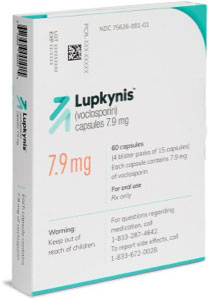
LUPKYNIS packaging

The recommended starting dose of LUPKYNIS is 23.7 mg, taken twice daily1
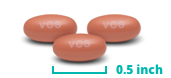
3 LUPKYNIS capsules, measuring 0.5 inch each

3 capsules
(7.9 mg each)
BID

12-hour
schedule

12 Hours

Taken as close
as possible to
schedule1

Empty
stomach

Stomach

1 hour before
or 2 hours
after a meal1

Swallow
whole

Broken Pill

Should not open,
crush, or divide
capsules1

  • LUPKYNIS is indicated in combination with MMF + steroids for the treatment of adult patients with active LN1
  • Dose should be taken within 4 hours. Beyond 4 hours, wait until next scheduled dose; do not double the dose1

No drug-level monitoring required.1

Individualized eGFR-Based Dose Modifications

Assess eGFR Every 2 Weeks for the First Month, Every 4 Weeks Through the First Year, and Quarterly Thereafter1

eGFR ≥60 mL/min/1.73 m2

No dose adjustment necessary;
continue 3 capsules BID

Three pills

eGFR <60 mL/min/1.73 m2

≤20% reduction
from baseline

3 LUPKYNIS capsules

No dose adjustment necessary; continue 3 capsules BID

>20% and <30%
reduction from
baseline

2 LUPKYNIS capsules

Reduce dose to 2 capsules BID

1 LUPKYNIS capsule

Reassess eGFR within 2 weeks; if still >20% reduced from baseline: reduce dose to 1 capsule BID

Reassess eGFR within 2 weeks; if still >80% of baseline, consider increasing dose by 1 capsule BID; do not exceed starting dose

≥30% reduction
from baseline

Discontinue
LUPKYNIS

Do Not Take

Reassess eGFR within 2 weeks; if >80% of baseline, consider restarting at 1 capsule BID

LUPKYNIS, like other calcineurin inhibitors, can cause acute and/or chronic nephrotoxicity. Monitor eGFR regularly during treatment and consider dose reduction or discontinuation in patients with decreases in eGFR from baseline. Patients with a persistent decrease of eGFR should be evaluated for chronic calcineurin-inhibitor nephrotoxicity. Consider the risks and benefits of LUPKYNIS treatment considering the patient’s treatment response and risk of worsening nephrotoxicity. The risk for acute and/or chronic nephrotoxicity is increased when LUPKYNIS is concomitantly administered with drugs associated with nephrotoxicity.1

The phase 3 study was designed to allow for dose modifications due to eGFR reductions.1,3

Other Dosing Adjustment Recommendations

  • Please refer to the Prescribing Information for a full list of dosing recommendations for specific patients, renal impairment, hepatic impairment, hypertension, and drug interactions with moderate CYP3A4 inhibitors and certain P-gp substrates with a narrow therapeutic window
  • Monitor blood pressure every 2 weeks for the first month of treatment, and as clinically indicated thereafter1
    • For blood pressure >165/105 mmHg, discontinue LUPKYNIS and initiate antihypertensive therapy
  • Avoid co-administration with strong CYP3A4 inhibitors (eg, ketoconazole, itraconazole, and clarithromycin) and strong and moderate CYP3A4 inducers1
  • Avoid eating grapefruit or drinking grapefruit juice while taking LUPKYNIS1

aLUPKYNIS is indicated in combination with MMF and steroids for the treatment of adult patients with active LN.1

BID=twice daily; eGFR=estimated glomerular filtration rate; LN=lupus nephritis; MMF=mycophenolate mofetil.

References: 1. LUPKYNIS®. Prescribing information. Aurinia Pharma U.S., Inc.; 2025. 2. Rovin BH, Teng YKO, Ginzler EM, et al. Efficacy and safety of voclosporin versus placebo for lupus nephritis (AURORA 1): a double-blind, randomised, multicentre, placebo-controlled, phase 3 trial. Lancet. 2021;397(10289):2070-2080. 3. Saxena A, Ginzler EM, Gibson K, et al. Safety and efficacy of long-term voclosporin treatment for lupus nephritis in the phase 3 AURORA 2 clinical trial. Arthritis Rheumatol. 2024;76(1):59-67.

Connect with an Aurinia representative.
Sign up for the latest news, updates, and materials for LUPKYNIS.

GET CONNECTED

IMPORTANT SAFETY INFORMATION

BOXED WARNING: MALIGNANCIES AND SERIOUS INFECTIONS

LUPKYNIS increases the risk of serious infections and malignancies that may result in hospitalization or death. See full Prescribing Information for complete BOXED WARNING.

CONTRAINDICATIONS

  • DO NOT use with strong CYP3A4 inhibitors (e.g., ketoconazole, itraconazole, clarithromycin).
  • DO NOT use LUPKYNIS if a patient has a history of serious hypersensitivity reactions, including anaphylaxis, to LUPKYNIS or any of its components.

WARNINGS AND PRECAUTIONS

  • Nephrotoxicity may occur. Monitor eGFR and adjust dose as needed.
  • Hypertension is common. Monitor blood pressure. May require antihypertensive therapy; watch for possibility of drug interactions with some antihypertensives.
  • Neurotoxicity: Monitor for neurologic symptoms including risk of posterior reversible encephalopathy syndrome (PRES).
  • Hyperkalemia: Monitor potassium, especially with concomitant agents associated with hyperkalemia.
  • QT Prolongation: Monitor ECG and electrolytes in high-risk patients.
  • Hypersensitivity Reactions (Including Anaphylaxis and Angioedema): Monitor and discontinue if reaction occurs.
  • Pure Red Cell Aplasia: Monitor and consider discontinuation if diagnosed.
  • Immunizations: Avoid live vaccines.
  • Lymphomas and Other Cancers: Immunosuppressants increase the risk of lymphomas and other cancers, especially of the skin. Monitor for skin changes and advise sun protection and avoidance of artificial UV light.

ADVERSE REACTIONS

The most common adverse reactions (≥3% and ≥2% against placebo) include decreased GFR, hypertension, diarrhea, headache, anemia, cough, urinary tract infection, abdominal pain upper, dyspepsia, alopecia, renal impairment, abdominal pain, mouth ulceration, fatigue, tremor, acute kidney injury, and decreased appetite. Nausea and vomiting have been reported during post-approval use.

SPECIFIC POPULATIONS

Pregnancy: Inform female patients of the potential risk to a fetus and to avoid use of LUPKYNIS during pregnancy.

Indication

LUPKYNIS is indicated in combination with a background immunosuppressive therapy regimen for the treatment of adult patients with active lupus nephritis (LN).

Limitations of Use: Safety and efficacy of LUPKYNIS have not been established in combination with cyclophosphamide. Use of LUPKYNIS is not recommended in this situation.

Please see full Prescribing Information, including BOXED WARNING, and Medication Guide for additional Important Safety Information about LUPKYNIS.

IMPORTANT SAFETY INFORMATION

BOXED WARNING: MALIGNANCIES AND SERIOUS INFECTIONS

LUPKYNIS increases the risk of serious infections and malignancies that may result in hospitalization or death. See full Prescribing Information for complete BOXED WARNING.

CONTRAINDICATIONS:

  • DO NOT use with strong CYP3A4 inhibitors (e.g., ketoconazole, itraconazole, clarithromycin).
  • DO NOT use LUPKYNIS if a patient has a history of serious hypersensitivity reactions, including anaphylaxis, to LUPKYNIS or any of its components.

WARNINGS AND PRECAUTIONS

  • Nephrotoxicity may occur. Monitor eGFR and adjust dose as needed.
  • Hypertension is common. Monitor blood pressure. May require antihypertensive therapy; watch for possibility of drug interactions with some antihypertensives.
  • Neurotoxicity: Monitor for neurologic symptoms including risk of posterior reversible encephalopathy syndrome (PRES).
  • Hyperkalemia: Monitor potassium, especially with concomitant agents associated with hyperkalemia.
  • QT Prolongation: Monitor ECG and electrolytes in high-risk patients.
  • Hypersensitivity Reactions (Including Anaphylaxis and Angioedema): Monitor and discontinue if reaction occurs.
  • Pure Red Cell Aplasia: Monitor and consider discontinuation if diagnosed.
  • Immunizations: Avoid live vaccines.
  • Lymphomas and Other Cancers: Immunosuppressants increase the risk of lymphomas and other cancers, especially of the skin. Monitor for skin changes and advise sun protection and avoidance of artificial UV light.

ADVERSE REACTIONS

The most common adverse reactions (≥3% and ≥2% against placebo) include decreased GFR, hypertension, diarrhea, headache, anemia, cough, urinary tract infection, abdominal pain upper, dyspepsia, alopecia, renal impairment, abdominal pain, mouth ulceration, fatigue, tremor, acute kidney injury, and decreased appetite. Nausea and vomiting have been reported during post-approval use.

SPECIFIC POPULATIONS

Pregnancy: Inform female patients of the potential risk to a fetus and to avoid use of LUPKYNIS during pregnancy.

Indication

LUPKYNIS is indicated in combination with a background immunosuppressive therapy regimen for the treatment of adult patients with active lupus nephritis (LN).

Limitations of Use: Safety and efficacy of LUPKYNIS have not been established in combination with cyclophosphamide. Use of LUPKYNIS is not recommended in this situation.

Please see full Prescribing Information, including BOXED WARNING, and Medication Guide for additional Important Safety Information about LUPKYNIS.